Followers

Wednesday, March 3, 2010

Tree tomatoes

You cut off the bottom and squeeze out the seeds and the flesh. They’re not very sweet, or very sour, or very anything. The seeds aren’t crunchy like passion fruit, but soft like large roe. The juice is bright red and looks like it would make a nasty stain. I’ve heard that you either love them or hate them, but I feel pretty neutral: I won’t be buying them in the market if there’s other fruit around, but I wouldn’t turn one down.

EDIT March 10: Ok, the most distinctive aspect of the flavor is a nice sourness. I have come to like these strange things, and I will in fact buy them at a market.

Monday, March 1, 2010

(Toilet) Training: Rwandan Taboos

We had one of our first sessions of training today. The highlight was our training director performing a pantomime of using a so-called squatty potty.  So far I’ve avoided the squatty potty, because we have what appears to be Western-style toilets in our training buildings, which are scattered throughout town.

Photo Caption: This shot from my house displays some of Rwanda’s unique approach to bathroom architecture.

However, the plumbing is not Western, so not only do you flush manually by pouring water into the toilet bowl, but you must abide by the crucial rule posted in all the bathrooms: do not throw paper in the toilet. Instead, you are supposed to put used toilet paper in a trashcan. This isn’t new to me, having had the same situation in Ghana, but it is a hard habit to reacquire. 

After the toilet talk, the training staff talked to us about taboos in Rwanda. To introduce the concept of a taboo, they asked the trainees to share an American taboo, and one guy shouted out “Putting used toilet paper in the trashcan.”

I’m still laughing. The trainers then showed us signs with Rwandan taboos, such as “Don’t overdose in alcohol consumption” and “Don’t buy things in the market without bargaining.”

My favorite was “Be flexible in frustration and discouragement situations.”

Ni kibazo? Si kibazo. Nta kibazo!

Before I left, I printed some Kinyarwandan vocabulary I found online. Today, I was talking to a few of our LCFs (Language and Cultural Facilitators, one of many PC acronyms). One asked how I found Kinyarwanda. Eager to impress, I grinned and declared it Ni kibazo! (Nee CheeBahZo)

That means “No problem!” Or so I thought.

My comment inspired riotous laughter, which is always encouraging when you’re learning a new language, and an emphatic Oya! (Oh-yah) which might sound like agreement but actually means “no.”

Turns out, ni kibazo means “it is a problem.” I was confusing it with si kibazo (See CheeBahZo), which actually means “it is not a problem” in response to something. You can also say nta kibazo (Nhah CheeBahZo) which means “no problem.” Subtle distinctions.

Ni kibazo and si kibazo now pop up frequently in our conversations, to much amusement.

Lady Gaga has arrived in Rwanda

Heard on the radio this morning in the market. I have also arrived in Rwanda and am enjoying it immensely. I'll post some first impressions and such later (Sunday?); the timed internet and countdown clock are not conducive to good writing.

Sunday, February 28, 2010

First Impressions: Rwandan Radio

The songs were a mix of Rwandan, dancehall, and what you’d hear 6 months ago on an hip-hop/rap station. The DJ would periodically turn down the volume on a song to talk in heavily accented English (not necessarily about the song), then turn the song back up, then turn it down and offer an interpretation of the song, then turn it back up for the sole purpose of fading it into the next song. Also, the DJ sometimes sang along to the songs.

Not sure if this is typical of Rwandan radio or unique to the program that happened to be on.

Saturday, February 27, 2010

First Impressions: 1000 hills is a pretty lowball estimate

- The hills are endless and gorgeous. There are countless shades of green: grass, trees, crops, the dark green shaded by clouds over a valley, the bright green illuminated by the sun.
- The clouds are intensely beautiful. The rain is intense.
- I’ve fallen for the architectural beauty of Vienna and Paris, but as far as capital cities go, Kigali is the most naturally beautiful of any I’ve seen.
- The smells are of fresh rain, wood burning, faint pollen.
- The carrots and (sorry Maine) potatoes are the most flavorful I’ve ever eaten.
- The paved roads, at least around Kigali and Nyanza, are in better shape than many roads in Boston.
- Every Rwandan I’ve met has been incredibly nice, especially Peace Corps staff.

Friday, February 26, 2010

A quote

From the issue of New African I read on the flight into Kigali, in an article about the 125th anniversary of the Berlin Conference on February 26th: “Since few societies outside Europe had opted for armed robbery as their principal source of livelihood, there was a vast overdevelopment of technologies of war in Europe….”

Sunday, February 21, 2010

Sunday, February 14, 2010

Contact Info & Wish List

I will check my email whenever I can, but may not always have time to respond. I would love to talk on Skype or my cell - you can find my contact info on facebook or by emailing me. My Rwandan number is +250 722 (the last 6 digits of my parents' home phone number).

I would also love to get mail:
Trude (my last name here)
U.S. Peace Corps Volunteer
B.P. 304
Gisenyi, RWANDA, East Africa


Some tips for mail (you can find a wish list below):

1. Writing "Par Avion" and "Air mail" is a MUST. Writing the address in red ink and adding "sister" before my name will increase the chance of my getting it. Seal well.
2. Letters cost 98 cents. Please number them and save a copy because things do get lost and/or arrive out of order. Letters can always include clips of newspaper and magazine articles. You don't have to hand write them - I'm happy to get typed letters. Postcards should be sent inside an envelope - apparently postcards alone are likely to end up decorating someone else's wall.

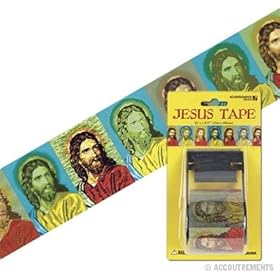
3. Packages should be sent in fixed-rate boxes to save money. Include a list of contents so I'll know if anything goes missing. On the customs forms, be vague and say USED (e.g. "used personal goods") or I'll have to pay hefty taxes. Valuables might not make it. Christian symbols, slogans, stickers, and Jesus packing tape (seriously, who can resist?) will help a package arrive intact.

WISH LIST

Reading: New Yorker, Economist, National Geographic, Atlantic, Foreign Policy, NY Review of Books, etc. Boston Globe Ideas section, NYT Tuesday Science. Crosswords (Thursday or earlier). Books I'd like (fiction and non-fiction). Offline-accessible stuff you shared/enjoyed on google reader (gonna miss my reader).

Video: new seasons of Lost season 6 (!!), 24 (if it's any good), Dexter, Weeds, Californication, Breaking Bad, (from Feb 22) How I Met Your Mother, Big Bang Theory, 30 Rock. Highlights of Daily Show/Colbert. Notable Boston sports games. New movies.

Audio (so I can update my ipod): podcasts, new music I might like, old music I might like and not have

Food:
Powdered drink mixes (gatorade, crystal lite) + herbal tea bags + hot chocolate powder
Chocolate (if it might melt, ziplock bags are great and I'll reuse them)
Dried fruit/berries that don't grow here (crasins, cherries, blueberries, rasberries, apricots...I can get pineapple and mango fresh)
Gummy bears, starburst, nips, fruit mentos, reese's pieces, oreos, skittles, sourpatch, york peppermint
Cheese powder from mac+cheese, other forms of cheese that will survive
Flavor packets (e.g. taco, thai curry paste), anything spicy/chili,  dressings and condiment packets (mustard, mayo)
Foil packets (tuna, salmon, those thai/indian ones)
Protein bars - I like Clif carrot cake
Nuts (spicy coatings welcome; peanuts not needed cause I have them here), trail mix
Kids' vitamins, stickers (to give away)

Misc:
Surprises!

Thursday, February 11, 2010

Rwanda links

Here are some recent links on Rwanda:
  • PBSVideo has a great segment on Partners in Health's program in Rwanda (you may recognize the organization for their work in Haiti). You will learn a bit about Rwandan health care, the PiH approach, and community health workers, as well as get to see some Rwandan scenery. If you have 20 minutes, take a look. Rwanda may be best recognized in the West because of the genocide, but the country is an innovator in the fields of community health and national health care (as well as economic development, among other things).
  • This IRIN article discusses the NGO Avega Agahozo's work with widows of the genocide. The effects of rape and other forms of sexual violence are still felt 16 years later, but this article discusses the positive steps being taken by survivors themselves. Avega Agahozo, founded by women survivors, is now treating nearly 50,000 women for medical issues associated with their traumas and has 25,000 members who presumably gain psychological and social support from the organization. Avega also provides legal services for women who want to testify in Rwanda's gacaca courts (ga-cha-cha: the traditional community courts adapted to address the genocide).  
  • On the economic front, The Economist recently wrote about Rwanda's plan to get every child in the country on a computer. This represents a huge logistical and technological challenge, and it will be interesting to see how it plays out.
  • Texas in Africa (one of my favorite blogs) writes about politics in Rwanda and links to a recent Human Rights Watch report on the subject.
  • Lastly, This is Africa's Real World: African Autocrats edition cracked me up. A lesson in African politics in the form of blunt satire.
I leave in less than two weeks. I'm ready mentally, but my to-do list is still too lengthy and my farewell tour in DC in NY has been disrupted by the snow, leaving me unable to say goodbye to several friends.


Visitor Stats

  © Blogger template Simple n' Sweet by Ourblogtemplates.com 2009

Back to TOP

